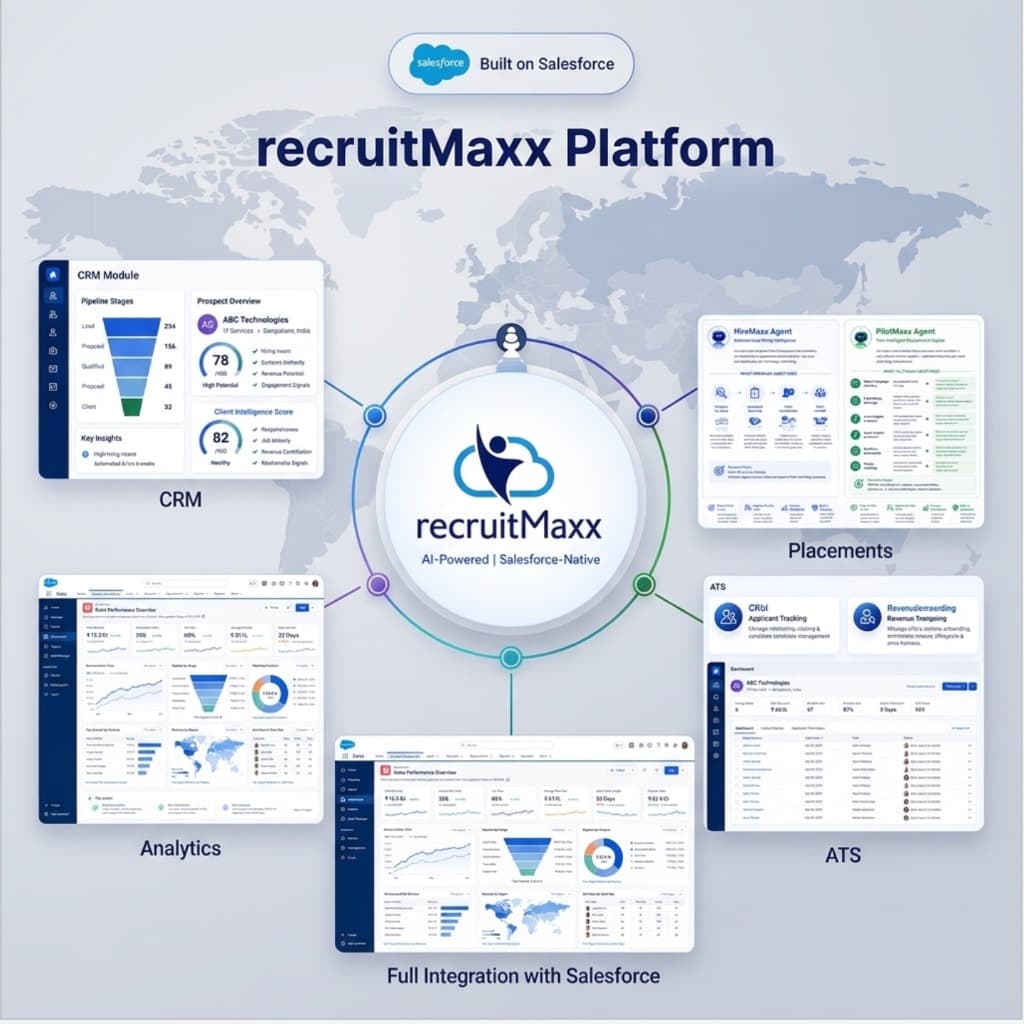
Salesforce Native Applicant Tracking System
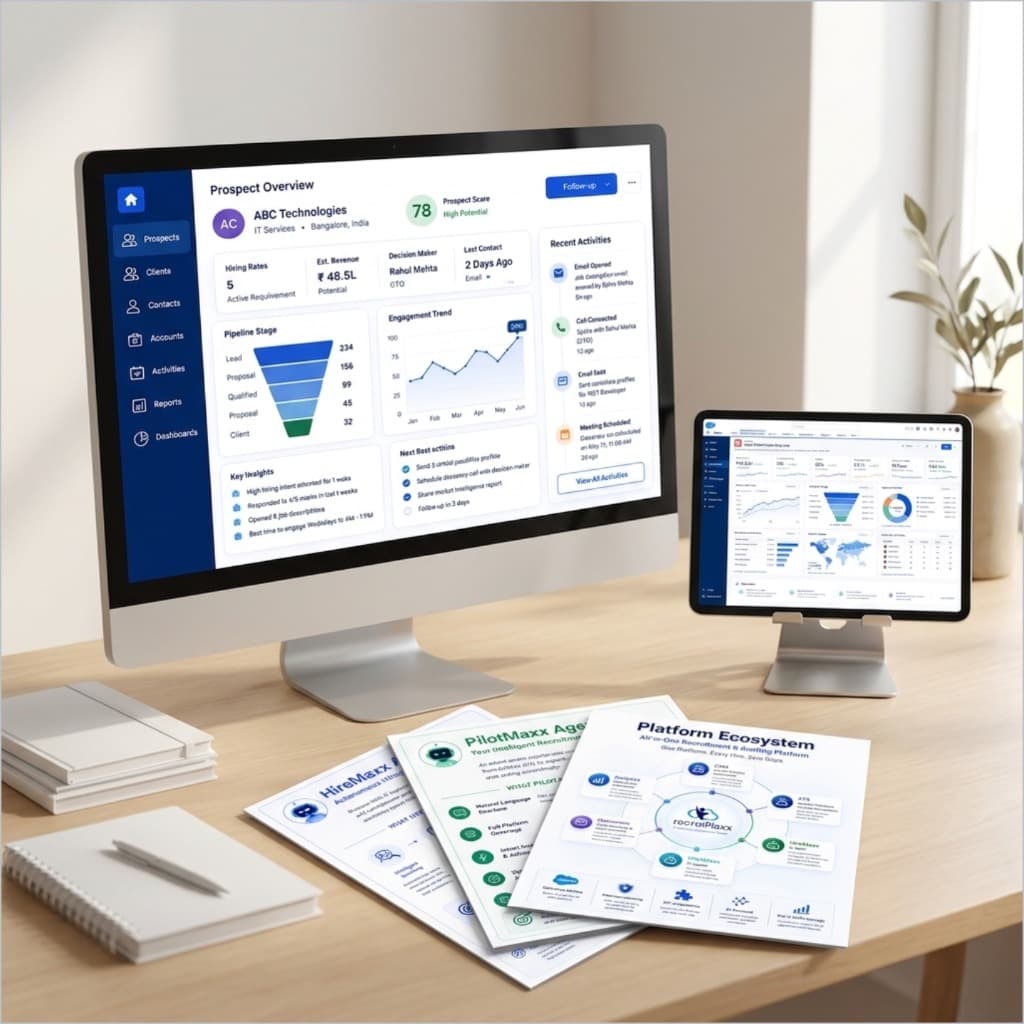
In the modern staffing landscape, your Applicant Tracking System (ATS) shouldn't be an island. The greatest operational bottleneck in recruitment today is the artificial disconnect between candidate data (living in the ATS) and client data (living in the CRM). A Salesforce Native Applicant Tracking System solves this flaw by unifying datasets into a single ecosystem.
Key Takeaways
- Unified Data Model: A native ATS shares the exact same database as your CRM, completely eliminating sync errors.
- Compliance Automation: Keeping candidate resumes strictly within Salesforce ensures effortless GDPR and CCPA compliance.
- Productivity Gains: Recruiters save an average of 1.5 hours per day by avoiding context-switching between different platforms.
The Cost of Disconnected Systems
Consider the daily life of a recruiter using a disjointed tech stack: They find a great candidate in their ATS. To submit this candidate, they must log into a separate CRM to check the client's current job requirements. If the candidate is hired, they must manually re-enter all the placement details into a third back-office billing system. This constant context switching is a massive financial drain.
"Agencies running disconnected ATS and CRM platforms lose hours every week to manual data reconciliation. Unifying those systems hands that time straight back to recruiters."
What "Native" Really Means
| Feature | Standalone ATS | Salesforce Native ATS |
|---|---|---|
| Data Visibility | Only candidates | 360-degree view of candidates and clients |
| Syncing | Nightly or delayed APIs | Zero sync required, instantaneous |
| Status Transitions | Requires manual manual imports | Smooth transition from Applicant to Client |
Enterprise-Grade Security and Compliance
In an era of strict data privacy laws, managing candidate information across multiple external databases is a massive legal liability. If a candidate requests the deletion of their data under GDPR (Right to be Forgotten) or CCPA, scrubbing it from five different integrated platforms is a logistical nightmare.
By utilizing a Salesforce Native ATS, all candidate resumes, compliance documents, Right-to-Work checks, and interview notes remain strictly within Salesforce boundaries. Your agency automatically inherits Salesforce's world-class security protocols, meaning compliance audits can be conducted from a single, centralized control panel.
Beyond Standard Applicant Tracking
Flow Builder
Create rules that automatically trigger background checks the moment an offer is accepted.
Agentforce AI
Have AI autonomously screen applicants and schedule interviews directly in the system.
Frequently Asked Questions (FAQs)
1. What is a Salesforce Native ATS?
It's an Applicant Tracking System built directly onto the Salesforce platform using Salesforce's core code, meaning it shares the exact same database as your CRM.
2. How does a native ATS improve security?
Because data never leaves Salesforce servers, it automatically inherits world-class enterprise security, making it easier to comply with GDPR and CCPA.
3. Does recruitMaxx offer an ATS?
Yes, recruitMaxx provides a comprehensive Native ATS combined with CRM functionality, eliminating data silos entirely.
Unify Your ATS, CRM & AI Sourcing on Salesforce
Stop paying for disconnected subscriptions and broken middleware. See how recruitMaxx saves recruitment agencies 15+ hours per consultant each week.