The Ultimate Guide to Global Executive Search in 2026

Global executive search workflows requires a delicate balance between deep, relationship-driven networking and robust, data-backed market intelligence. Whether you are hunting for a CTO in Berlin or a CFO in Toronto, understanding local compensation structures, tax implications, and cultural nuances is critical. In 2026, technology is finally catching up to the nuanced demands of headhunting.
Key Takeaways
- Data-Backed Advisory: Executive recruiters must provide real-time compensation benchmarks to justify search retainers.
- The High Cost of Failure: A bad executive hire costs upwards of 213% of their base salary in lost momentum and severance.
- AI in Headhunting: AI isn't replacing relationships; it's identifying passive "open-to-work" signals before competitors notice them.
The Evolution of Executive Search
Historically, executive search relied almost entirely on the personal Rolodex of the managing partner. Today, a Rolodex is insufficient. Executive candidates expect recruiters to act as strategic advisors who understand equity structures, board dynamics, and macroeconomic trends in their specific vertical.
"The cost of a bad executive hire runs well beyond their salary. Mitigating that risk requires a rigorous, data-driven assessment process rather than relying on gut feeling alone."
Navigating Complex Global Geographies
Every major commercial hub has a unique compensation and equity structure. A competitive pre-IPO equity package for a VP of Engineering in San Francisco looks completely different from an equivalent package in Amsterdam or Singapore due to differing tax regulations (e.g., ISOs vs. RSUs vs. phantom shares).
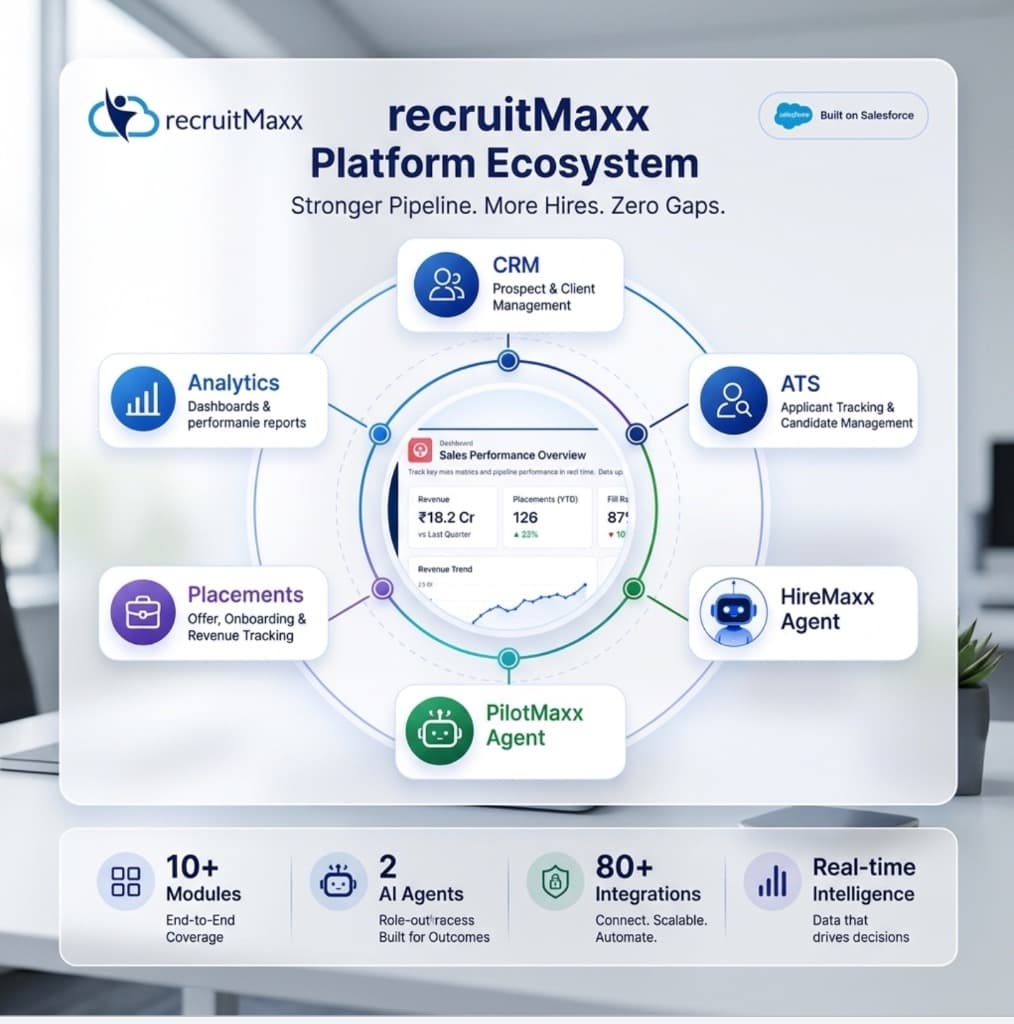
Top-tier executive search workflows firms utilize unified CRMs to track these global compensation benchmarks in real-time, allowing them to advise clients on exactly what it will cost to extract a top performer from their current role.
Using AI for Predictive Sourcing
While deep relationships remain paramount at the C-level, AI tools have revolutionized how headhunters map the market. Using predictive sourcing algorithms within Salesforce, recruiters can monitor millions of executives for subtle "flight risk" signals.
1. Board Seat Changes
Executives frequently step down from advisory boards 3-6 months before a major career transition.
2. Company Performance
Missing earnings calls often makes leadership teams statistically more receptive to outreach.
3. Conference Activity
An uptick in public speaking engagements often precedes a desire to increase visibility ahead of a move.
Local Reach vs Global Infrastructure
| Approach | Boutique Local Firms | Global Tech-Enabled Search |
|---|---|---|
| Market Mapping | Limited to regional connections | AI scans global talent pools instantly |
| Comp Benchmarking | Relies on outdated annual surveys | Real-time CRM data tracks live offers |
| Client Reporting | Weekly PDF updates | Live portal access via Salesforce Communities |
Frequently Asked Questions (FAQs)
1. How does predictive sourcing work for executives?
It uses machine learning to detect digital behavioral shifts (like leaving board seats) that historically precede a resignation.
2. Why do global firms need unified CRMs?
If your London and New York offices use different systems, you cannot provide the coordinated, enterprise-grade talent mapping that global Fortune 500 clients demand.
3. Is AI replacing human headhunters?
No, the final close at the C-level still requires immense human EQ. AI simply ensures the headhunter spends their time talking to the right people at the exact right moment.
Unify Your ATS, CRM & AI Sourcing on Salesforce
Stop paying for disconnected subscriptions and broken middleware. See how recruitMaxx saves recruitment agencies 15+ hours per consultant each week.